
Wedding catering has evolved far beyond traditional banquet meals and predictable plated dinners. Today’s couples want dining experiences that feel authentic, meaningful, and memorable. One of the biggest shifts reshaping modern wedding receptions is the growing popularity of farm-to-table catering.
Farm-to-table wedding catering focuses on fresh, locally sourced ingredients prepared with seasonal awareness and culinary creativity. More than just a food trend, it represents a broader lifestyle choice centered around sustainability, quality, and intentional hospitality. Couples are increasingly choosing menus that reflect their values while creating a more immersive and flavorful guest experience.
From organic produce and locally raised meats to handcrafted desserts and sustainable presentation styles, farm-to-table catering has become one of the defining elements of modern weddings. The approach combines elegance with comfort while offering guests meals that feel both elevated and genuine.
What Farm-to-Table Catering Means for Weddings
Farm-to-table catering emphasizes sourcing ingredients directly from local farms, ranches, fisheries, and artisan producers. Instead of relying heavily on mass-produced ingredients transported long distances, caterers prioritize freshness, seasonality, and regional sourcing.
Key Characteristics of Farm-to-Table Catering
Common elements include:
- Seasonal produce
- Locally sourced meats and seafood
- Organic ingredients
- Handmade desserts and breads
- Sustainable serving practices
- Fresh herbs and edible flowers
- Minimal processed foods
This approach creates meals that feel vibrant, flavorful, and connected to the local environment.
Why Couples Are Choosing Farm-to-Table Weddings
Modern weddings are becoming more personalized, and catering is now one of the primary ways couples express their style and values.
Freshness and Flavor Matter More Than Ever
Locally sourced ingredients are often fresher because they travel shorter distances before preparation. Seasonal fruits, vegetables, and proteins tend to offer better texture, richer flavor, and higher quality overall.
Guests notice the difference when dishes are prepared with ingredients that are fresh and thoughtfully selected.
Sustainability Is Influencing Wedding Decisions
Many couples want celebrations that feel environmentally responsible. Farm-to-table catering supports sustainability through:
- Reduced transportation emissions
- Support for local agriculture
- Lower food waste
- Seasonal menu planning
- Eco-conscious sourcing practices
This trend reflects a larger movement toward intentional and mindful event planning.
Guests Want More Meaningful Dining Experiences
Wedding guests increasingly value quality over quantity. Rather than oversized menus filled with generic options, guests appreciate carefully curated meals with fresh ingredients and thoughtful presentation.
Farm-to-table catering creates a dining experience that feels personal and memorable rather than mass-produced.
Seasonal Menus Are Becoming a Wedding Essential
One of the defining features of farm-to-table catering is seasonality. Modern caterers design menus around ingredients that are naturally available during the wedding season.
Spring Wedding Menu Trends
Spring farm-to-table menus often include:
- Fresh asparagus
- Peas and microgreens
- Citrus salads
- Herb-roasted chicken
- Strawberry desserts
- Floral-inspired cocktails
The flavors tend to feel light, refreshing, and vibrant.
Summer Wedding Menu Trends
Summer weddings commonly feature:
- Heirloom tomatoes
- Grilled vegetables
- Fresh berries
- Watermelon salads
- Seafood dishes
- Herb-infused cocktails
Outdoor dining experiences pair especially well with summer farm-to-table receptions.
Fall Wedding Menu Trends
Autumn-inspired menus often include:
- Root vegetables
- Squash dishes
- Apple-based desserts
- Slow-roasted meats
- Rustic breads
- Warm seasonal spices
Fall farm-to-table weddings are known for their cozy and comforting atmosphere.
Winter Wedding Menu Trends
Winter menus may highlight:
- Braised meats
- Rich sauces
- Seasonal greens
- Roasted vegetables
- Warm desserts
- Artisan cheeses
These menus create a refined and intimate dining experience perfect for colder months.
Interactive Farm-to-Table Food Stations
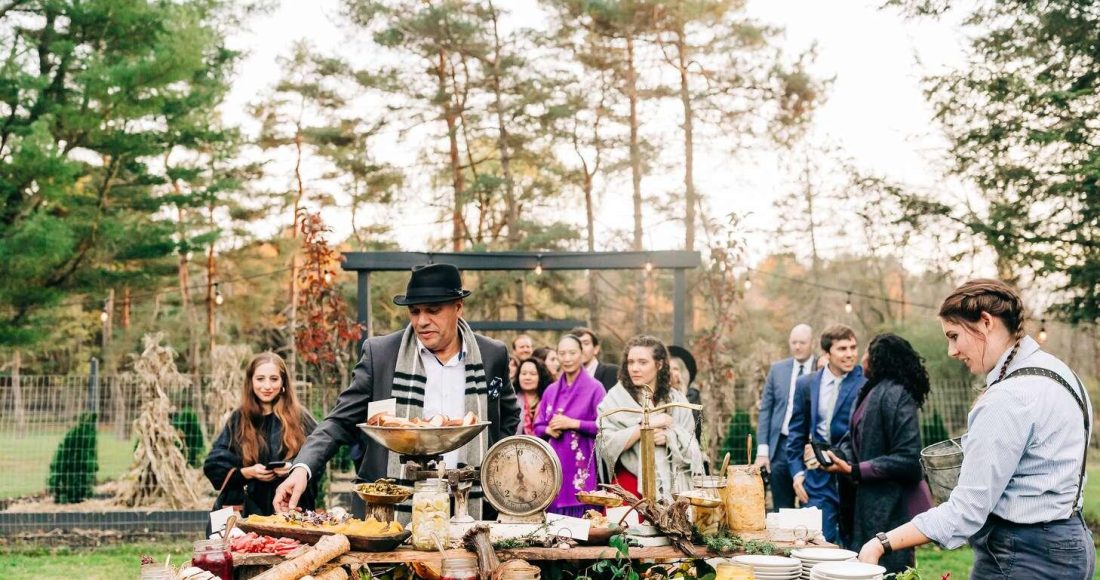
Interactive food stations are becoming one of the most popular catering trends at modern weddings. Couples want guests to engage with the food experience rather than simply sit through a traditional dinner service.
Popular Interactive Station Ideas
Farm-to-table-inspired stations often include:
- Fresh pasta bars
- Artisan bread stations
- Local cheese tastings
- Oyster shucking stations
- Seasonal salad bars
- Wood-fired pizza stations
- Live grilling stations
These experiences encourage guest interaction while showcasing ingredient freshness and craftsmanship.
Family-Style Dining Continues to Grow
Farm-to-table weddings naturally pair well with family-style dining. Shared platters and communal serving styles create a warm and welcoming atmosphere.
Why Family-Style Service Works Well
Benefits include:
- Encourages conversation
- Creates a relaxed environment
- Highlights abundance and hospitality
- Allows guests to sample multiple dishes
- Enhances visual presentation
Family-style service also aligns with the community-centered values associated with farm-to-table dining.
Local Ingredients Are Becoming Luxury Features
Luxury wedding catering is no longer defined solely by imported ingredients or overly formal presentation. Today, high-end catering increasingly emphasizes ingredient quality, local sourcing, and culinary authenticity.
Premium Local Ingredients Trending in Weddings
Upscale farm-to-table menus may include:
- Grass-fed beef
- Heritage pork
- Organic vegetables
- Artisan cheeses
- Locally harvested honey
- Fresh herbs
- Sustainable seafood
Guests appreciate knowing where ingredients come from and how they were produced.
Grazing Tables Remain Highly Popular
Grazing tables continue to dominate farm-to-table wedding receptions because they combine rustic beauty with elegant presentation.
What Makes Grazing Tables Effective
These displays typically feature:
- Seasonal fruits
- Artisan breads
- Cured meats
- Local cheeses
- Nuts and spreads
- Fresh vegetables
- Handmade desserts
The natural textures and organic presentation styles fit perfectly within the farm-to-table aesthetic.
Why Guests Love Them
Grazing tables encourage movement, social interaction, and relaxed dining while creating a visually impressive focal point within the reception space.
Sustainable Catering Practices Are Expanding
Sustainability is becoming a core expectation rather than a niche preference within the wedding industry.
Eco-Friendly Catering Trends
Modern farm-to-table caterers often prioritize:
- Compostable serving materials
- Reduced plastic use
- Food donation programs
- Minimal food waste
- Recyclable packaging
- Energy-efficient cooking practices
These efforts help couples host celebrations that feel responsible without sacrificing elegance.
Farm-Inspired Décor Is Influencing Reception Design
Farm-to-table catering often extends beyond the menu itself and influences the overall wedding aesthetic.
Popular Farm-to-Table Décor Elements
Couples are incorporating:
- Wooden farm tables
- Linen runners
- Wildflower centerpieces
- Fresh herb arrangements
- Ceramic serving dishes
- Neutral earth-tone palettes
- Candlelit outdoor dining
The result is an atmosphere that feels natural, sophisticated, and inviting.
Cocktail Programs Are Becoming More Seasonal
Farm-to-table wedding trends are also reshaping beverage service. Couples are moving away from generic drink menus and embracing cocktails inspired by seasonal ingredients and local flavors.
Trending Seasonal Cocktail Ideas
Popular options include:
- Lavender lemonade cocktails
- Rosemary-infused bourbon drinks
- Blackberry mojitos
- Cucumber gin spritzers
- Apple cider cocktails
- Fresh herb mocktails
Fresh garnishes and handcrafted syrups add a refined and personalized touch.
Outdoor Dining Experiences Are Increasing in Popularity
Farm-to-table catering naturally complements outdoor wedding settings. Many couples are choosing open-air receptions that highlight scenery, natural lighting, and relaxed elegance.
Popular Outdoor Venue Types
Farm-to-table weddings often take place at:
- Vineyards
- Farms
- Gardens
- Barn venues
- Orchards
- Private estates
These environments enhance the connection between the food, atmosphere, and guest experience.
Chef-Led Experiences Are Becoming More Common
Couples increasingly want their catering experience to feel interactive and personal. As a result, chef-led dining experiences are becoming more prominent at upscale weddings.
Examples of Chef-Led Experiences
These may include:
- Live cooking demonstrations
- Custom tasting menus
- Open-fire cooking
- Chef introductions during courses
- Ingredient storytelling
Guests appreciate learning about the dishes while feeling more connected to the dining experience.
Plant-Forward Menus Are Gaining Momentum
Farm-to-table weddings are helping redefine how vegetarian and plant-based dishes are presented. Rather than treating them as secondary options, caterers are creating flavorful vegetable-focused dishes that appeal to all guests.
Popular Plant-Forward Wedding Dishes
Trending options include:
- Charred cauliflower steaks
- Seasonal vegetable risottos
- Wild mushroom pasta
- Roasted beet salads
- Herb-grilled vegetables
- Stuffed squash dishes
These meals highlight freshness and creativity while supporting sustainable dining practices.
Smaller Menus With Higher Quality Are Trending
Modern couples are increasingly choosing smaller, carefully curated menus rather than overwhelming guests with endless options.
Why Simplicity Works Better
Focused menus allow caterers to:
- Prioritize ingredient quality
- Improve presentation
- Reduce waste
- Maintain consistency
- Deliver stronger flavors
Guests often remember a few exceptional dishes more than large menus filled with average selections.
Final Thoughts
Farm-to-table catering is redefining wedding receptions by combining fresh ingredients, sustainability, and meaningful dining experiences. Today’s couples want celebrations that feel authentic, intentional, and connected to their personal values.
From seasonal menus and interactive food stations to sustainable practices and locally sourced ingredients, farm-to-table weddings create an atmosphere that feels both elegant and welcoming. Guests are no longer simply attending a meal. They are participating in an experience centered around freshness, hospitality, and thoughtful celebration.
As wedding trends continue evolving, farm-to-table catering remains one of the most influential movements shaping modern receptions because it prioritizes quality, connection, and memorable guest experiences.
Frequently Asked Questions
What is farm-to-table wedding catering?
Farm-to-table wedding catering focuses on using fresh, locally sourced, and seasonal ingredients to create meals that emphasize quality, sustainability, and flavor.
Why is farm-to-table catering popular for weddings?
Couples appreciate the freshness, sustainability, and personalized dining experiences associated with farm-to-table catering. It also creates a more meaningful and authentic atmosphere.
Are farm-to-table weddings more expensive?
Costs can vary depending on ingredient selection and venue location. Some locally sourced ingredients may cost more, but seasonal planning can also help reduce expenses in certain cases.
What venues work best for farm-to-table weddings?
Farms, vineyards, gardens, orchards, barns, and outdoor estates are especially popular because they complement the natural and organic aesthetic of farm-to-table dining.
Can farm-to-table menus accommodate dietary restrictions?
Yes. Farm-to-table caterers often specialize in customized menus and can usually accommodate vegetarian, vegan, gluten-free, and allergy-sensitive requests.
What décor style pairs well with farm-to-table catering?
Rustic elegance, garden-inspired décor, neutral color palettes, wooden tables, fresh florals, and candlelit dining all pair beautifully with farm-to-table wedding themes.
How can couples make farm-to-table catering feel more interactive?
Interactive stations, chef-led experiences, family-style dining, grazing tables, and live cooking demonstrations all help create a more engaging guest experience.